A Search for a Best Synth
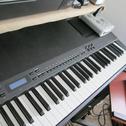
My Best Synth
My Best Synth is a MIDI Controller
Thank you for visiting my website. My goal is to provide unbiased reviews and technical articles for only the best and latest home recording studio technology.
My quest for locating the best synth began over 45 years ago when I began changing tones and experimenting with my father’s homemade Morse code adjustable oscillator rig. Dad was an electrical engineer with a first class FCC license and a lot of home radio gear. I dreamed of owning my own electronic keyboard, and loved playing with the demo set-ups brought to our local county fairs and home shows.
I began piano lessons and violin lessons at age 8 and played in the local school orchestra. After graduating from college I promptly bought my first keyboard – a Yamaha DX-27. I was soon reading everything I could get my hands on regarding programming sound envelopes and digital sampling methods.
Although I found many of the moog style synth sounds fascinating, I longed for realistic synthesizer orchestral sound patches. I did not want my music to sound like the soundtrack for a Nintendo game. It was not too long into the mid 1980’s before sampling keyboards started to flood the market. I would spend hours on Saturday afternoons in music stores experimenting with thousands of sounds in sampler keyboard libraries.
But, I am also happy to report that I have recently discovered some of the traditional best synth style sounds like those found on the Access Virus TI, and which were made famous with several world-class techno, trance, and electronica artists.
Since I was on a budget, I still did not have access to my dream sound library. I settled on a used Kawai K-4, which was as close to a sampler keyboard as I could get with my limited finances. It served me well into the mid 2000’s.
My Experiments with Sampled Sounds
Around 2005 I decided to experiment with sampled sounds on my Dell laptop. The libraries were expensive, and the processor speed and memory requirements massive. My first experiment with Giga Studio was not the success I had dreamed of, and I was ready to give up.
In 2011 I upgraded my laptop to an i7 Quad Core processor running Windows 7. I began experimenting with Band in a Box for composing and arranging and soon discovered VST and DXi sound patches. I had found my Nirvana! In no time at all I had complied thousands of awesome patches in my sound library with the ability to support any music genre my heart desired – Electronica, New Age, Classical, World, Jazz, Country, Rock, Bluegrass, Big Band, the horizon was limitless, with no end in sight for new technology developments.
In all honesty, my bias and focus is now centered on software synths. However, I am also aware of many new developments in the realm of hardware synths. Some people who play live still want everything in one rack mount unit that is easy to program operate during live performance.
Each person’s needs are different. For the home studio enthusiast on a limited budget, software synths may bring the most bang for the buck. However, for live performance, hardware synths still have a lot to offer. Some people make use of both technologies via MIDI interfaces. The latest version of Band in a Box by PG Music even has an iPhone app for controlling the sequencer and sound patch library from the stage during live performances!
I hope you find the information at my best synth website useful. I think I have found the best synth I was searching for – and it is a live sample of an orchestral instrument in the form of a VST sound patch. With the many thousands of VST samples on the market today, you should have little trouble finding your own best synthesizer too.
Some VST Synths Can Fool the Experts
I have a friend who is the principal trumpet player in a large city orchestra. I like to send him samples my home studio experiments. A couple of years ago I unsuccessfully tried to fool him with a sample trumpet patch from one of the top VST suppliers. He said he was impressed, but was able to tell it was a “fake” and remains a “purist.” This past January I tried again, and he now says that he can hardly notice – if at all – the difference between a sampled VST trumpet and the real thing on my latest CD. But, for understandable reasons, he still remains a purist.
Please visit my reviews page if you are in the market for some of the best synthesizer technology on the market today.
![[Google]](../wp-content/plugins/easy-adsense-lite/google-light.gif)