Is a Jazzy Hallelujah Chorus Unorthodox?
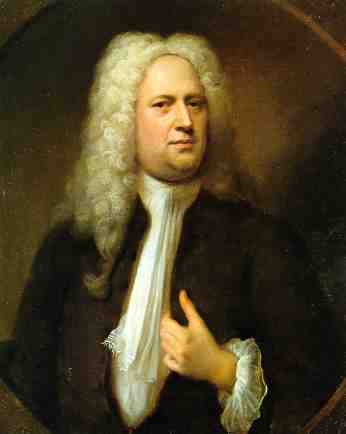
Public Domain from Wikimedia.
Handel’s Traditional Messiah
Handel’s Messiah is an English-language oratorio that was composed in 1741 by George Frideric Handel. First performed in Dublin on April 13, 1742, it premiered in London a year later. Following an initially modest public reception, the oratorio gained in popularity to become one of the best-known choral works in Western music.
Handel originally wrote Messiah for modest vocal and instrumental forces, but in the years after his death, his work was adapted for performance with giant orchestras and choirs.
http://en.wikipedia.org/wiki/Messiah_(Handel)
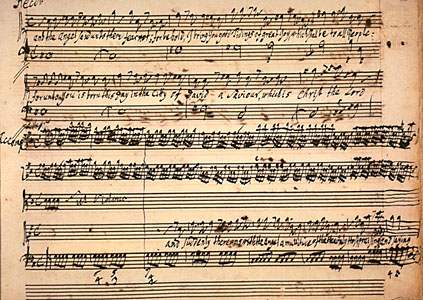
A Jazzy Messiah Arrangement
Truthfully, Handel did not write the Messiah as Christmas music since the second and third parts focus on the death and resurrection of Christ, and the sending of the Holy Spirit at Pentecost. Also, the first performance of the Messiah occurred at Easter, not during Advent or Christmas.
http://www.patheos.com/blogs/markdroberts/series/handels-messiah-an-unexpected-easter-masterpiece/
In the middle of my 2014 Lent observation, I found myself recalling that I did not finish the orchestration of the Jazzy Messiah MIDI sequence that I began working on last December. Part of the reason is that I found myself slightly fearful that a jazzed up version of this sacred work might be a tad bit too unorthodox. However, when I revisited this MIDI sequence in the dead of winter I found my spirits lifted.
Perhaps fewer traditionalists will be offended by the use of acoustic sampled instrument sounds instead so much electronica. The original MIDI sequence used in this demo was created by an unknown arranger, and it really cooks! A group like The Brooklyn Tabernacle Choir might even attempt to perform and arrangement like this!
PG Music’s Real Band, a 48 channel sequencer, was used to modify and orchestrate this 16 channel arrangement. The Real Band program is included with the Band in a Box program, also by PG music.
Four VST plug-ins were used to create the instrument patches: Miroslav Philharmonik was used to create the Steinway grand piano, upright bass, trumpet, and percussion tracks; Garritan Instant Orchestra was used for the chromatic percussion; a Roland TSS1 GM software synth was used to create the Jazz Organ and New Age synth tracks, and DSK Sound Fonts were used to create the saxophone tracks.
Some of the tracks were copied to new tracks, layered, and programmed for instrument changes.
The table below shows the patches and tracks used for the final orchestration.
|
Channel Number |
VST Synth Software |
Instrument Patch |
|
1 |
Miroslav Philharmonik |
Steinway Grand Piano |
|
2 |
Miroslav Philharmonik |
Trombone LP |
|
3 |
Roland TSS1 |
Jazz Guitar |
|
4 |
Miroslav Philharmonik |
Fretless Upright Bass |
|
5 |
Miroslav Philharmonik |
Muted Trumpet |
|
6 |
Muted |
Muted |
|
7 |
DSK SaxZ |
Tenor Sax |
|
8 |
Miroslav Philharmonik |
Trumpet LP |
|
9 |
Muted |
Muted |
|
10 |
Garritan Instant Orchestra |
Glockenspeil |
|
11 |
Roland TSS1 |
Standard Drum Kit |
|
12 |
Miroslav Philharmonik |
Female Choir Ohhs |
|
13 |
Muted |
Muted |
|
14 |
Roland TSS1 |
Synth Pads – Fantasia |
|
15 |
Roland TSS1 |
Synth Pads – Warm Pad |
|
16 |
Roland TSS1 |
Rhodes Organ |
DSK Sound Fonts
DSK offers a large selection of sampled sound libraries at their website as free downloadable shareware, but freewill donations are suggested.
![[Google]](../wp-content/plugins/easy-adsense-lite/google-light.gif)